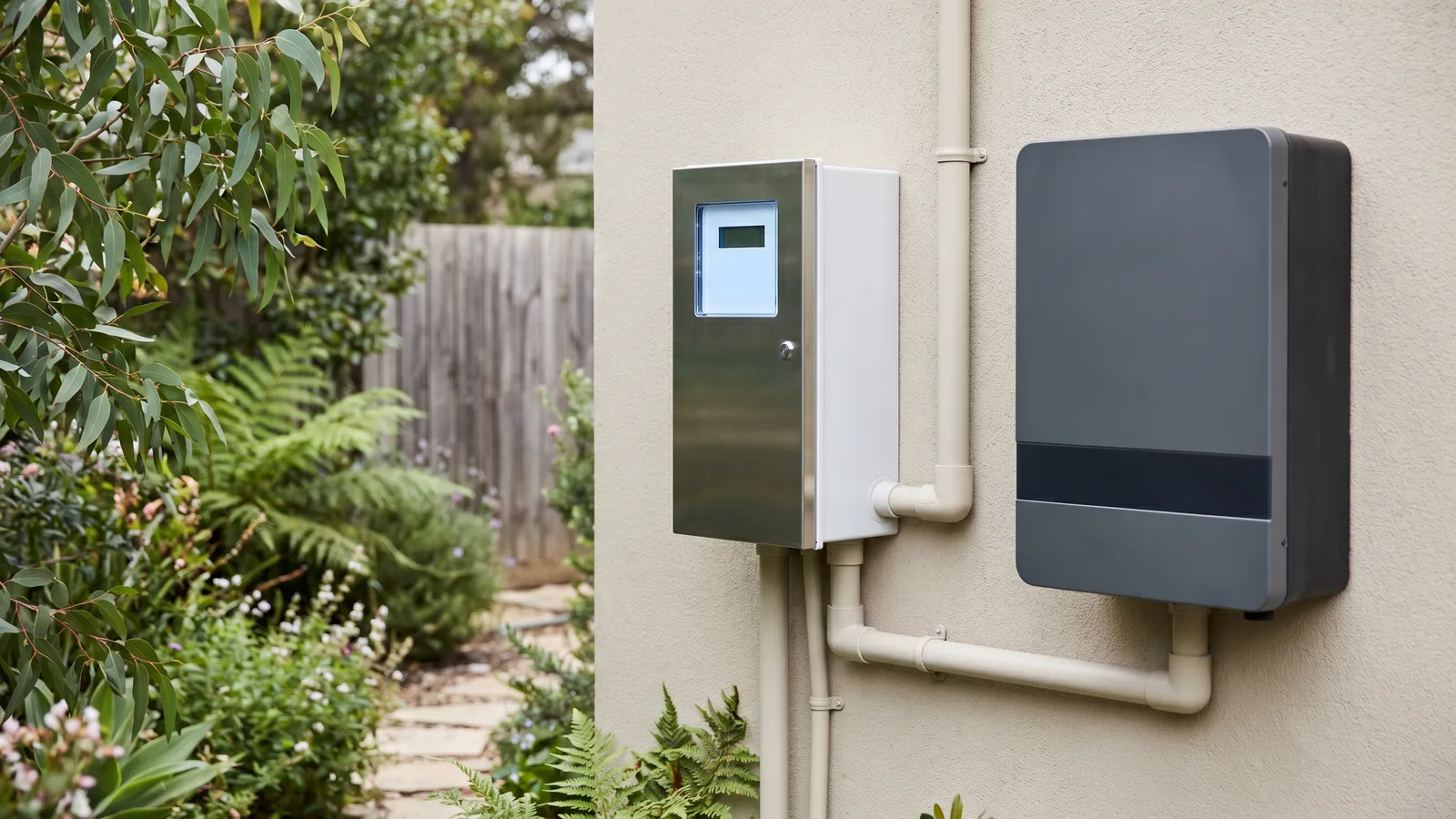
From 1 July 2026, retailers in New South Wales, south-east Queensland and South Australia must offer a regulated plan called the Solar Sharer Offer: 3 consecutive hours of free electricity every day, in local time, with up to 24 kWh in that window charged at zero before a capped rate applies. You still pay a daily supply charge and for power used at other times. Whether it is worth switching depends on whether you can reliably move enough use into the free window, and what you pay today.
The short answer: it can be worth it if you will automate or routinely run loads between 11am and 2pm (or midday to 3pm in South Australia). It is a poor fit if most of your electricity is fixed at night, on controlled load, or in the evening peak and you cannot shift it. The federal government designed the offer to soak up abundant midday solar on the grid; our Solar Sharer plan tables list 22 retailers' standing offers as at 29 October 2026, from AER plan data.
What the free-power window is
The Australian Energy Regulator sets the window as part of the Default Market Offer (DMO) for 2026-27. On the networks the AER prices, the free period is:
- 11am-2pm on Ausgrid, Endeavour Energy, Essential Energy (NSW) and Energex (south-east Queensland).
- 12pm-3pm on SA Power Networks (South Australia).
Those times are fixed in local time and do not move with daylight saving. The Electricity Retail Code requires exactly 3 hours of free usage each day and treats the first 24 kWh used in the window as the "reasonable use cap". Energy Made Easy notes that 24 kWh is around what a five-person household uses in an entire day on average, so many homes will never hit the cap if they only shift part of their load (Energy Made Easy: Solar Sharer Offer, checked 29 September 2026).
Usage above 24 kWh in the window is charged at a regulated rate (the shoulder or off-peak rate for that network, depending on the tariff structure). The AER publishes those prices, including GST, in its Solar Sharer Offer fact sheet for the 2026-27 DMO. For example on Ausgrid the evening peak is 64c/kWh and off-peak is 28c/kWh, with a daily supply charge of 176c/day ($642 a year if unchanged).
Who is eligible
energy.gov.au lists four conditions (checked 29 September 2026): you must live in NSW, South Australia or south-east Queensland, have a household smart meter, not be supplied through an embedded network, and be with a retailer that is required to offer the Solar Sharer Offer. You do not need rooftop solar, and renters can opt in if their retailer and meter allow it.
- Opt-in only. Your retailer cannot move you onto the offer without agreement, and it cannot be used as a default offer.
- Residential only. Small businesses are not covered by the federal offer (Victoria's separate Midday Power Saver is also residential-only).
- Smart meter required. The Code defines this as a device that records usage at frequent intervals (for example every 30 minutes). If you do not have one, ask your retailer about installation and any fees.
- Not every retailer. Retailers with fewer than 1,000 residential customers across the three regions on 1 March of the previous financial year are exempt. As at 29 October 2026, 22 retailers publish Solar Sharer plans in the AER's Consumer Data Right data.
Before you agree, the retailer must warn you that not shifting electricity usage into the free period could result in higher electricity costs, because other hours on the Solar Sharer tariff can be priced higher than a simple flat rate. That warning is in the Code and repeated on energy.gov.au.
How much free power could save you
Free kWh only help if they replace power you would otherwise buy at a positive rate. The table below shows the annual value of shifting a fixed amount of usage into the window if that usage would otherwise have been charged at the network's peak rate on the Solar Sharer Offer (AER Figure 3, 2026-27, incl. GST). Your real saving depends on your current plan and when you actually use power.
| Network (example) | Free window | Peak rate | Value of 10 kWh/day shifted at peak | Max. at cap (24 kWh/day at peak) |
|---|---|---|---|---|
| Ausgrid (Sydney) | 11am-2pm | 64c/kWh | $2,336/yr | $5,606/yr |
| Energex (SE Qld) | 11am-2pm | 49c/kWh | $1,789/yr | $4,292/yr |
| SA Power Networks | 12pm-3pm | 59c/kWh | $2,154/yr | $5,168/yr |
Illustration only: 10 kWh × rate × 365 days. If shifted load would have been off-peak anyway, the saving is closer to the off-peak rate (on Ausgrid, 10 kWh/day at 28c is about $1,022/yr). Supply charges and evening use still dominate many bills.
energy.gov.au is explicit that the free-power period does not make your whole bill free: you still pay for usage outside the window and for the daily supply charge. Controlled load circuits (many hot-water and pool pumps) are not free in the window unless your retailer maps them that way; Energy Made Easy says controlled load charges can still apply during the free usage period.
How to use the free window well
The offer rewards load shifting, moving discretionary use into the three hours when energy is free on the grid.
- Timers and schedules. Run the dishwasher, washing machine, dryer, pool pump (on general supply) or air conditioning pre-cool during the window. Smart plugs and appliance delay starts help if you are not home.
- Electric vehicles. Schedule AC charging to start at 11am (or noon in SA). A typical home charger adds about 7-11 kWh in three hours at 2.3-3.7 kW, well inside the 24 kWh cap if that is your main midday load.
- Home batteries. A hybrid battery can charge from the grid during the free window (many warranties allow grid charging for time-of-use shifting). That stores cheap energy for the evening peak. See is a solar battery worth it for payback; the Solar Sharer window can improve the maths if you charge the battery at 0c and discharge at peak. Some households also use a virtual power plant for extra credits, which is separate from the standing offer.
- Rooftop solar. You do not need panels to join, but if you already export midday solar, the plan's feed-in tariff on Solar Sharer plans is often low (commonly 0-3c/kWh on many retailers' standing offers). Using solar onsite during the free window does not add extra value beyond what self-consumption already saves; the offer mainly helps non-solar homes and those charging batteries or EVs from the grid at midday.
Why the grid sees a spike at 11am
In a speech on 13 October 2026, AEMO Chief Executive Officer Daniel Westerman said that at exactly 11am every day, electricity demand jumps up, and that right now that demand jump is around 360 megawatts across the National Electricity Market, and has been growing in recent months. He linked the pattern to the start of free-power periods under some tariffs and to households automating battery, EV and appliance charging (AEMO, CEO speech at 2026 AFR Energy and Climate Summit).
That is useful context, not a reason to avoid the offer. It shows many people are already optimising for the window. It also means timed devices that all start on the hour can add local demand; staggering starts by 10-15 minutes within the free period is gentler on the grid and your own circuits.
Caveats and downsides
- Evening-heavy homes. If you cannot move cooking, heating or entertainment off the evening peak, you pay the Solar Sharer peak rates (64c/kWh on Ausgrid in 2026-27) without capturing much free power.
- Supply charge unchanged. You pay the daily supply fee every day, free window or not.
- Low solar export credits. Solar owners should compare the plan's FiT with their current plan; exporting at 1-3c while importing at 50-60c in the evening can hurt if self-consumption is low.
- Market offers. The AER notes households may also seek market offers with free usage periods similar to the Solar Sharer Offer. A competitive flat or time-of-use plan might beat the standing offer if you will not shift load.
- Victoria is different. The federal Solar Sharer Offer does not apply in Victoria. From 1 October 2026, the Victorian Midday Power Saver is a separate scheme with a free window currently set at 11am-2pm for opt-in residential customers with a smart meter (Essential Services Commission, checked 29 September 2026).
- WA, ACT, Tasmania and the NT. No equivalent federal offer as at 29 September 2026; DCCEEW describes work to expand the Solar Sharer Offer to non-DMO jurisdictions (DCCEEW: Default Market Offer).
Is it worth switching?
Worth considering if: you work from home or can timer appliances; you have or plan an EV and can charge mid-morning; you will charge a battery from the grid in the window; or you are on a high flat rate and can move a reliable 10-15 kWh a day into the free period.
Think twice if: most usage is on controlled load or fixed at night; you are a heavy evening user and will not change habits; you rely on a high feed-in tariff from solar exports; or you are in an embedded network or lack a smart meter.
Compare your current bill and tariff with a Solar Sharer fact sheet from your retailer. For regulated prices, windows and every listed plan by network, use Solar Sharer: free hours and retailer tables. For panel and battery economics, is solar worth it and the rebate calculator stay the starting point.
Sources checked 29 September 2026: AER Solar Sharer fact sheet, energy.gov.au, Energy Made Easy, AER DMO 2026-27. Plan counts as at 29 October 2026 (AER CDR). AEMO demand figure from speech dated 13 October 2026. General information, not financial advice.
Common questions
Is the Solar Sharer Offer worth it?
It is worth it if you can shift a meaningful share of your usage into the 3-hour free window (11am-2pm in NSW and south-east Queensland, 12pm-3pm in SA), up to 24 kWh a day. On Ausgrid, shifting 10 kWh a day from the 64c/kWh peak into the free window saves about $2,336 a year before supply charges; if you cannot shift load, the standing offer can cost more than a flat plan.
Do I need solar panels for free power from 11am to 2pm?
No. energy.gov.au states you do not need your own rooftop solar. The offer is for households with or without solar, renting or owning, provided you are in NSW, SA or south-east Queensland, have a smart meter, are not on an embedded network, and opt in with an eligible retailer.
How much free electricity do I get each day?
Up to 24 kWh in the 3-hour window is charged at zero under the Code's reasonable use cap. Usage above that in the same window is billed at the regulated shoulder or off-peak rate for your network. The daily supply charge still applies.
Will my retailer put me on the Solar Sharer Offer automatically?
No. It is opt-in only. Retailers must warn you that failing to shift usage into the free period could leave you paying more overall.
Why does electricity demand jump at 11am?
AEMO's CEO said in October 2026 that NEM demand rises by about 360 MW at 11am when many households automate batteries, EVs and appliances for the start of free-power tariffs. Staggering start times slightly within the window avoids everyone charging at once.