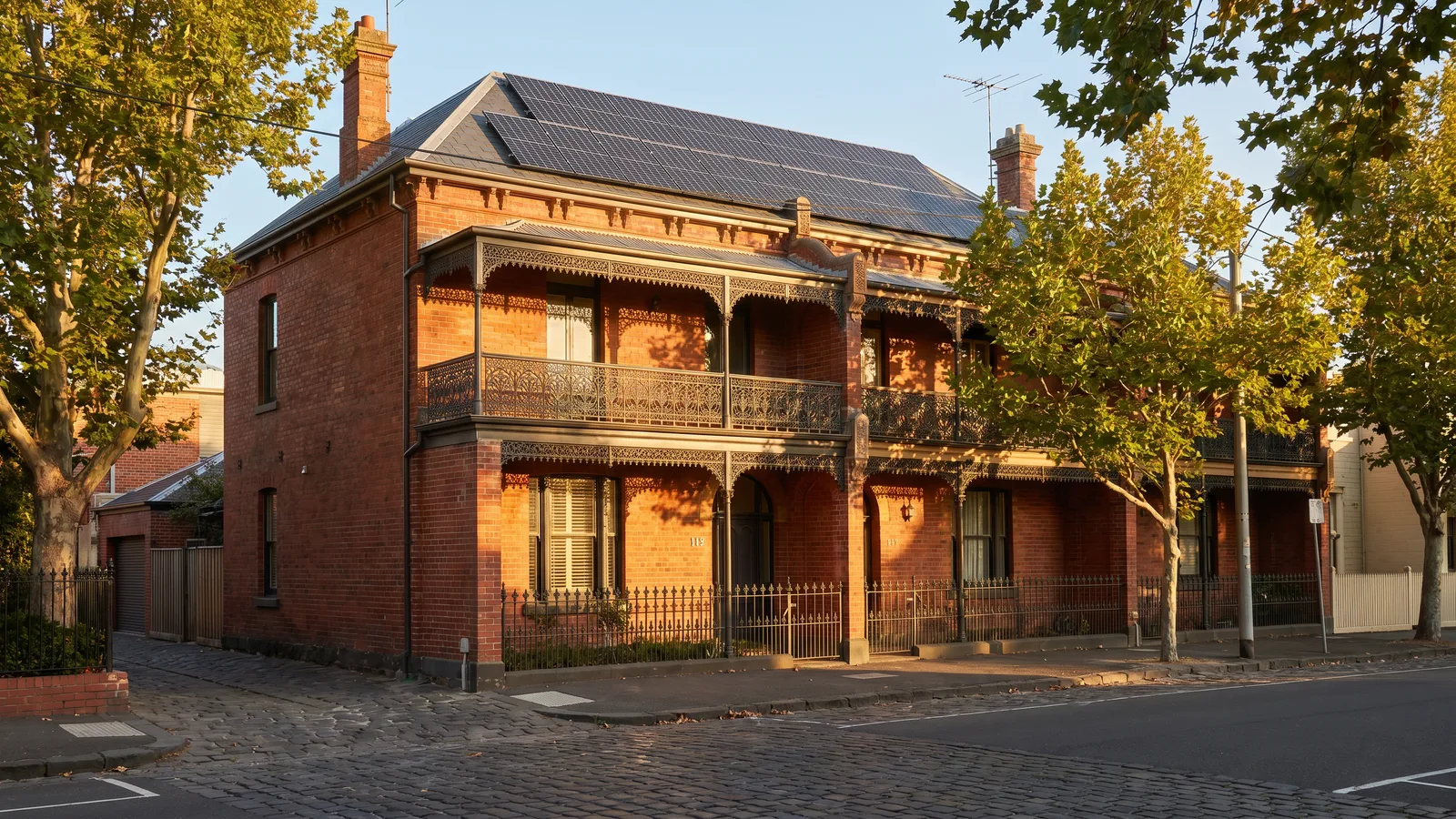
What changed in VIC recently
Checked line by line against the official sources on 13 July 2026.
The Solar Homes income cap was cut from $210,000 to $150,000 on 1 July 2026. Households under $150,000 can still claim the $1,400 panel rebate plus the matching $1,400 interest-free loan; above it, the state rebate is off the table.
Victoria has no state battery program (the Solar Homes battery loan closed in May 2025). Battery money in VIC is the federal discount, about $3,631 on a 13.5 kWh unit.
How the VIC battery rebate stack works in 2026
There is no single "VIC solar battery rebate". What you actually claim is a stack: the federal Cheaper Home Batteries discount (about $271 per usable kWh on the first 14 kWh, so roughly $3,631 on a 13.5 kWh battery), the federal solar STC rebate (about $1,556 on a 6.6 kW system in STC Zone 4), plus the live state incentives below. Everything is applied at the point of sale by your installer. You never receive cash; you just pay less.
Every VIC program, with live status
Solar Homes, Solar Panel (PV) Rebate
LiveSolar Victoria's flagship rebate cuts $1,400 off a new rooftop solar system at point of sale, with an optional matching interest-free loan of $1,400 repaid over 4 years (about $29 a month).
Solar Homes, Hot Water Rebate
LiveRebate on a heat-pump or solar hot-water system to replace a gas or electric storage unit. Stacks with the panel rebate within the household's annual cap.
Closed schemes (don't get caught out)
These still rank in old articles and ads. They are gone; here's what happened, so nobody sells you on them.
Solar Homes, Battery Loan
ClosedClosed May 2025. Federal Cheaper Home Batteries Program now the primary battery support.
Why storing beats exporting in Victoria
Victoria scrapped its regulated minimum feed-in tariff from 1 July 2025; the legal floor is $0.00/kWh. Typical flat-rate offers pay about 4.5–8 c/kWh with headline offers up to ~10c under conditions, and time-varying rates can legally pay nothing for midday exports. Peak grid power still costs 25–45 c/kWh in the evening, which is the gap a battery captures.
The feed-in tariff is what your retailer pays for exported solar. It's not part of the rebate, but it is the reason the battery maths works: every kilowatt-hour you store and use at night is worth what you'd otherwise pay the grid in the evening, several times what a midday export earns.
| Retailer / benchmark | Feed-in rate | Conditions |
|---|---|---|
| Typical flat offers | 4.5–8c/kWh | Uncapped |
| Headline conditional offers | up to ~10c/kWh | Uncapped |
| Time-varying midday | can be $0.00/kWh | Uncapped |
Rates checked against published plans and regulator determinations. They change frequently and can vary by network area; use the AER's Energy Made Easy tool for the live picture. Full VIC feed-in tariff comparison →
The cost of waiting in VIC
Both step-downs are legislated schedules, not marketing deadlines. The battery factor keeps falling every January and July until the program winds up after 2030, and the solar scheme phases out on 31 December 2030.
See your exact VIC battery rebate
Enter your postcode. We'll match you with one CEC-accredited installer who covers your area.
How we get you the full stack without the legwork
We're a free service for VIC homeowners. You give us your postcode and bill range, we match you with one CEC-accredited installer who works in your area, and they apply every rebate you're eligible for at the point of sale. No quote-shopping. No call-centre scripts. One specialist, one number.
- 30-second eligibility check on this page: postcode, ownership, bill, roof.
- A friendly follow-up from your specialist within 24 to 48 hours.
- Matched with a single CEC-accredited installer in VIC.
- Installer applies the full stack at invoice. You pay the discounted price, that's it.
More on how it works → · Run your own numbers in the calculator →
Common questions about the VIC battery rebate
How much is the VIC solar battery rebate in 2026?
On a typical 13.5 kWh battery, the federal Cheaper Home Batteries discount is worth about $3,631 in VIC (6.8 STCs per usable kWh at the current certificate price). Victoria adds nothing for batteries (its battery loan closed in May 2025), though the $1,400 Solar Homes rebate applies to panels installed at the same time if your household earns under $150,000. Add the federal solar STC rebate of about $1,556 on a 6.6 kW system and VIC's $1,400 solar rebate, and the full stack on a typical solar plus battery install comes to about $6,587.
Does VIC have its own battery rebate?
No. Victoria's battery loan closed in May 2025 and there is no VIC battery rebate. Battery support in Victoria is the federal Cheaper Home Batteries Program only, worth about $3,631 on a 13.5 kWh battery. The state's $1,400 solar panel rebate still applies if you install panels at the same time and your household earns under $150,000.
What is the VIC feed-in tariff for 2026-27?
Typical VIC feed-in rates run 0 to 10 c/kWh for 2026-27. Victoria scrapped its regulated minimum feed-in tariff from 1 July 2025; the legal floor is $0.00/kWh. Typical flat-rate offers pay about 4.5–8 c/kWh with headline offers up to ~10c under conditions, and time-varying rates can legally pay nothing for midday exports. Peak grid power still costs 25–45 c/kWh in the evening, which is the gap a battery captures.
When does the battery rebate end?
The federal battery discount runs to 2030, but it steps down before then. On 1 January 2027 the subsidy factor falls from 6.8 to 5.7 STCs per usable kWh, trimming about $599 off a 13.5 kWh battery ($3,631 now versus $3,032 after). The solar STC rebate also drops on 1 January 2027, worth about $319 less on a typical 6.6 kW VIC system. Installs certified before those dates lock in the current rates.
Can I claim the battery rebate on my existing solar system?
Yes. The federal Cheaper Home Batteries Program covers batteries added to existing solar as well as new solar plus battery installs. The battery must be 5 to 100 kWh nominal, installed by an accredited installer, and VPP-capable if you're on-grid. VIC-specific incentives have their own rules; we confirm both when we get in touch.
When does the solar rebate end in Victoria?
Two different clocks, and the federal one is the urgent one. Victoria's Solar Homes panel rebate of up to $1,400 has no announced end date, but it got harder to qualify for on 1 July 2026 when the household income cap dropped from $210,000 to $150,000. The federal rebates are the ones on a published countdown: the battery discount drops from 6.8 to 5.7 STCs per usable kWh on 1 January 2027, and the solar STC deeming period drops a year every 1 January until the scheme finishes after 2030. Waiting past New Year costs a Victorian household about $918 on a typical solar plus battery install.
Who is eligible for the Victorian solar rebate in 2026?
Since 1 July 2026 the Solar Homes panel rebate is limited to households with a combined income under $150,000 a year, down from $210,000. The rebate covers up to 50% of the install cost to a maximum of $1,400, and you can add a matching interest-free loan of up to $1,400 repaid over four years. Victoria has no state battery program, so on the battery side it is the federal discount only, about $3,631 on a 13.5 kWh unit.
How do I apply for the solar rebate in Victoria?
For the federal money, you don't. There is no form to lodge and no waiting for a cheque. Your accredited installer creates the certificates, claims them, and takes the value off your quote before you pay, so a 6.6 kW system in Victoria is quoted about $1,556 cheaper and a 13.5 kWh battery about $3,631 cheaper. What you have to do is check the discount is actually itemised on the quote, and that the installer is accredited. The Victorian Solar Homes rebate is the exception: that one you do apply for through Solar Victoria, and you need your eligibility confirmed before the system is installed.
Get matched with your VIC installer
One vetted CEC-accredited installer for your roof and postcode, quoting on today's verified rebate rates. Free, no obligation, no quote-shopping headache.