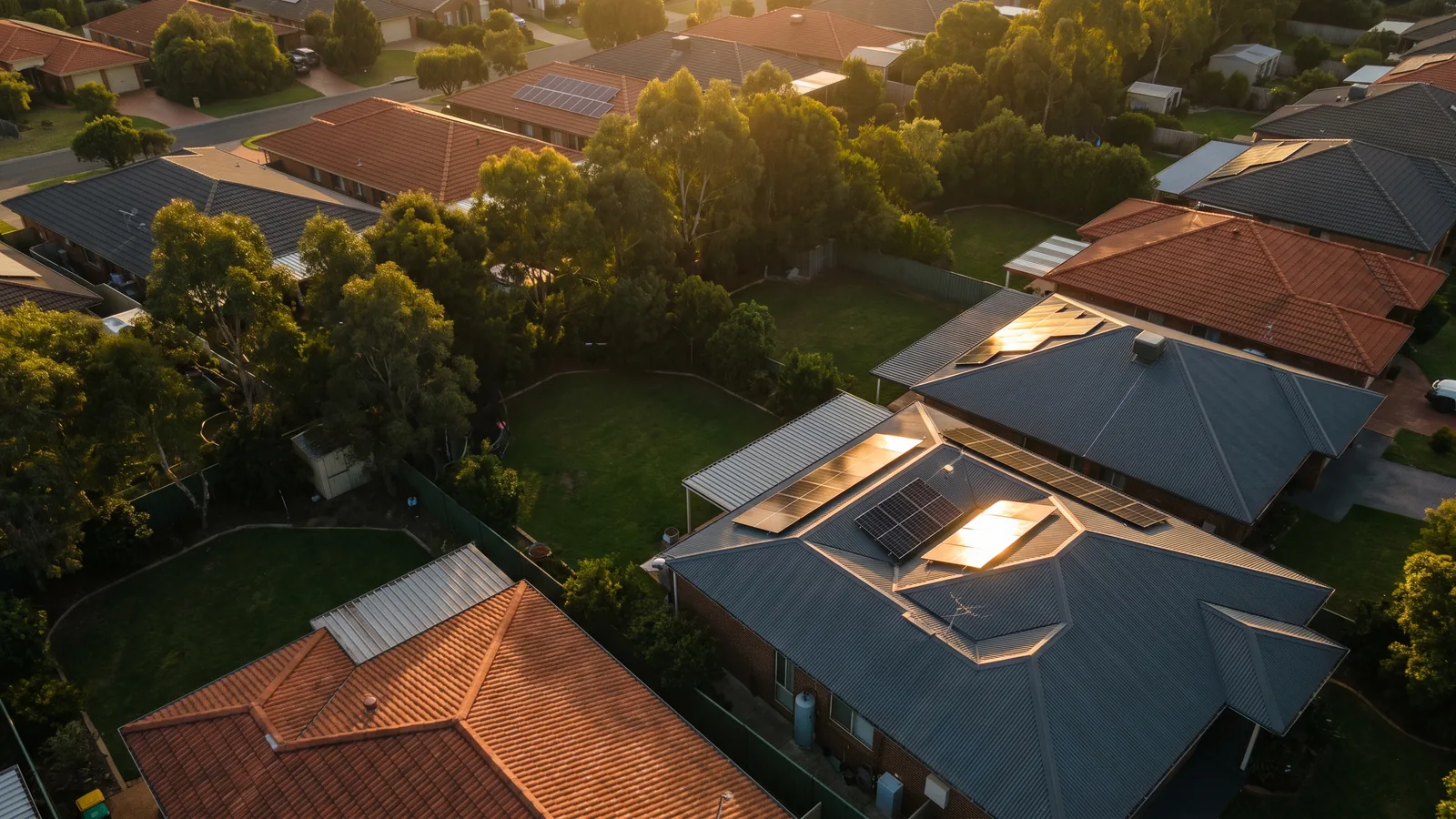
System size comparison
How to choose your system size
Three factors matter most:
1. Your quarterly electricity bill
Under $300: a 5 kW system covers most usage. $300–$600: 6.6 kW is the standard. $500–$800: step up to 8 kW. Above $700: 10 kW or larger.
2. Your daytime usage pattern
Households that use most of their electricity during the day (pool pumps, ducted air-con, electric hot water, work-from-home) get more value out of a larger system. Households that use most of their power in the evening should size more conservatively or add a battery.
3. Your future loads
Planning an EV in the next 2 years? Add 2–3 kW to whatever you'd otherwise install. EVs typically double a home's electricity demand. Planning a heat-pump hot water replacement? Add 1 kW.
Common questions
What size solar system do most Australian households install?
6.6 kW is the most-installed residential size in Australia, it pairs with a 5 kW inverter (the legacy standard) and hits the sweet spot of federal rebate, real-world generation, and easy DNSP approval. Around 65% of new residential installs are 6.6 kW.
How do I know what size I need?
Quarterly bill is the cleanest signal. Under $300/quarter: 5 kW. $300–$600: 6.6 kW. $500–$800: 8 kW. Above $700: 10–13.2 kW. Adjust up if you have a pool, electric hot water, ducted air-con, or an EV.
Does a bigger system always pay back faster?
No. Payback is fastest at 6.6 kW for most households, the federal STC rebate scales linearly with size, but exported electricity earns less than self-consumed electricity, so bigger systems with low self-consumption can have longer paybacks. Add a battery to make a bigger system pay back faster.