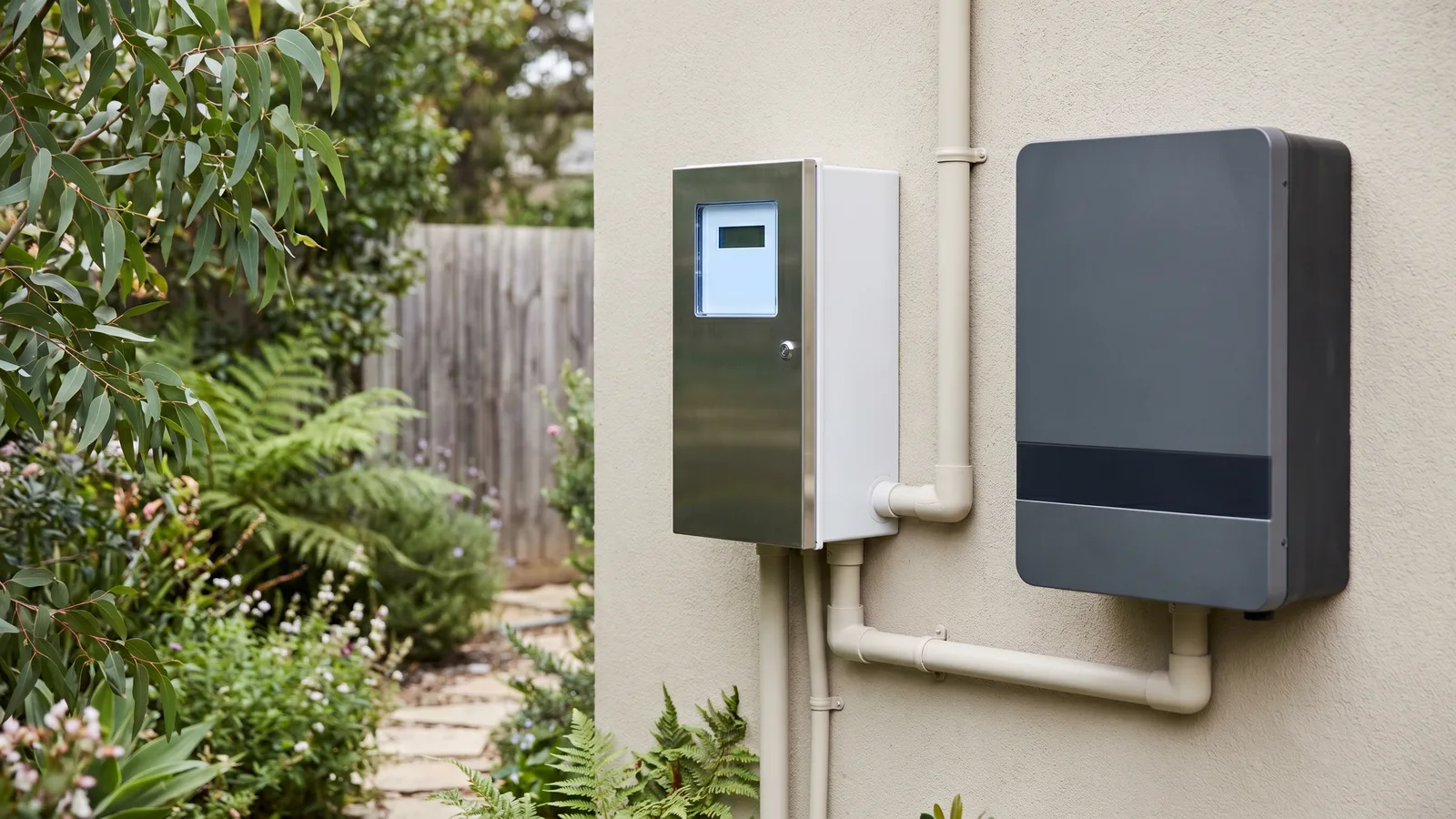
Tasmania has a single regulated feed-in tariff, 9.276 c/kWh from 1 July 2026, set by the Tasmanian Economic Regulator and applied across all retailers. Tasmania also has the country's highest average quarterly bills, so self-consumption still beats exporting.
TAS retailer feed-in rates
| Retailer | Headline FIT | Cap |
|---|---|---|
| Aurora Energy | 9.276c/kWh | Uncapped |
| 1st Energy | 9.276c/kWh | Uncapped |
Rates verified against retailers' published plans for TAS customers in 2026. Rates change frequently. Always compare via the AER's Energy Made Easy comparison tool before switching.
What the daily cap actually means
Most TAS FIT plans apply the headline rate only for the first X kWh of export per day. After the cap, the rate drops (often to 1–3 c/kWh). The cap is usually 5, 10, or 14 kWh per day.
For an average 6.6 kW system in TAS, daily summer export is typically 12–18 kWh and winter export is 4–8 kWh. A 5 kWh cap means you'll be capped out by 10am most summer days. A 14 kWh cap covers most days year-round.
Rule of thumb: if your daily export averages 8 kWh, a plan with a 14 c/kWh rate capped at 5 kWh/day pays you the same total as a flat 8 c/kWh uncapped plan. The uncapped plan wins on bigger systems and longer summer days.
How feed-in tariffs interact with solar payback
FIT rates are the second-biggest driver of solar economics, after the upfront rebate. For most TAS households on a typical 6.6 kW system, the FIT contribution is $200–$500 per year of the total savings. That's not nothing, it's roughly one year of payback acceleration.
But it's also not the main driver. Self-consumption (using solar power yourself rather than exporting it) is usually worth 3–5× more, kWh-for-kWh, because import rates are 3–10× higher than export rates. The biggest single thing you can do to maximise solar economics is run your dishwasher, washing machine, hot water, and pool pump during the day.
Switching retailers for a better FIT
- Compare plans with Energy Made Easy (the AER's free tool). Filter for "solar customers" and your network area.
- Calculate the total annual difference (FIT credit + supply charge + import rate × your usage). Don't just pick the highest FIT.
- Switch in 5 minutes online. There's no exit fee and no service interruption, your existing solar install keeps producing through the switchover.
- Most retailers honour the new FIT from the date you switch, billed on your next quarterly meter read.
The future of feed-in tariffs in TAS
TAS feed-in tariffs are likely to stay range-bound around current levels in 2026. The trend over 3–5 years is gradual decline as solar penetration grows; battery storage and time-of-use plans offset this for households that can use the shift.
Common questions
What is the best solar feed-in tariff in Tasmania?
In TAS, top published feed-in rates currently reach about 9.276 c/kWh, typically with a daily export cap. Tasmania has a single regulated feed-in tariff, 9.276 c/kWh from 1 July 2026, set by the Tasmanian Economic Regulator and applied across all retailers. Tasmania also has the country's highest average quarterly bills, so self-consumption still beats exporting. Compare both the headline rate AND the cap before switching, a 13c/kWh rate capped at 5 kWh/day is worth less than a 9c/kWh uncapped rate for most households.
Is there a minimum feed-in tariff in Tasmania?
Yes. Tasmania has a single regulated feed-in tariff, 9.276 c/kWh for 2026-27, set by the Tasmanian Economic Regulator. All retailers in the state pay the same rate, so there is nothing to shop around for on exports.
Should I pick the retailer with the highest feed-in tariff?
Not always. The headline FIT rate is just one factor. Check the daily cap (the rate after the cap is usually much lower), the daily supply charge, and the import (peak/off-peak) rates. A high FIT plan with a high daily supply charge and high import rates can be worse overall than a moderate FIT plan with competitive imports. Run it through the AER's Energy Made Easy comparison to compare like-for-like.
Will my feed-in tariff change over time?
Yes. Retailers can change their voluntary FIT rates at any time (with notice). In states with high solar penetration like TAS, daytime export rates have been trending down as wholesale market prices fall during peak solar hours. Battery storage offsets this by shifting your export to higher-value evening hours.