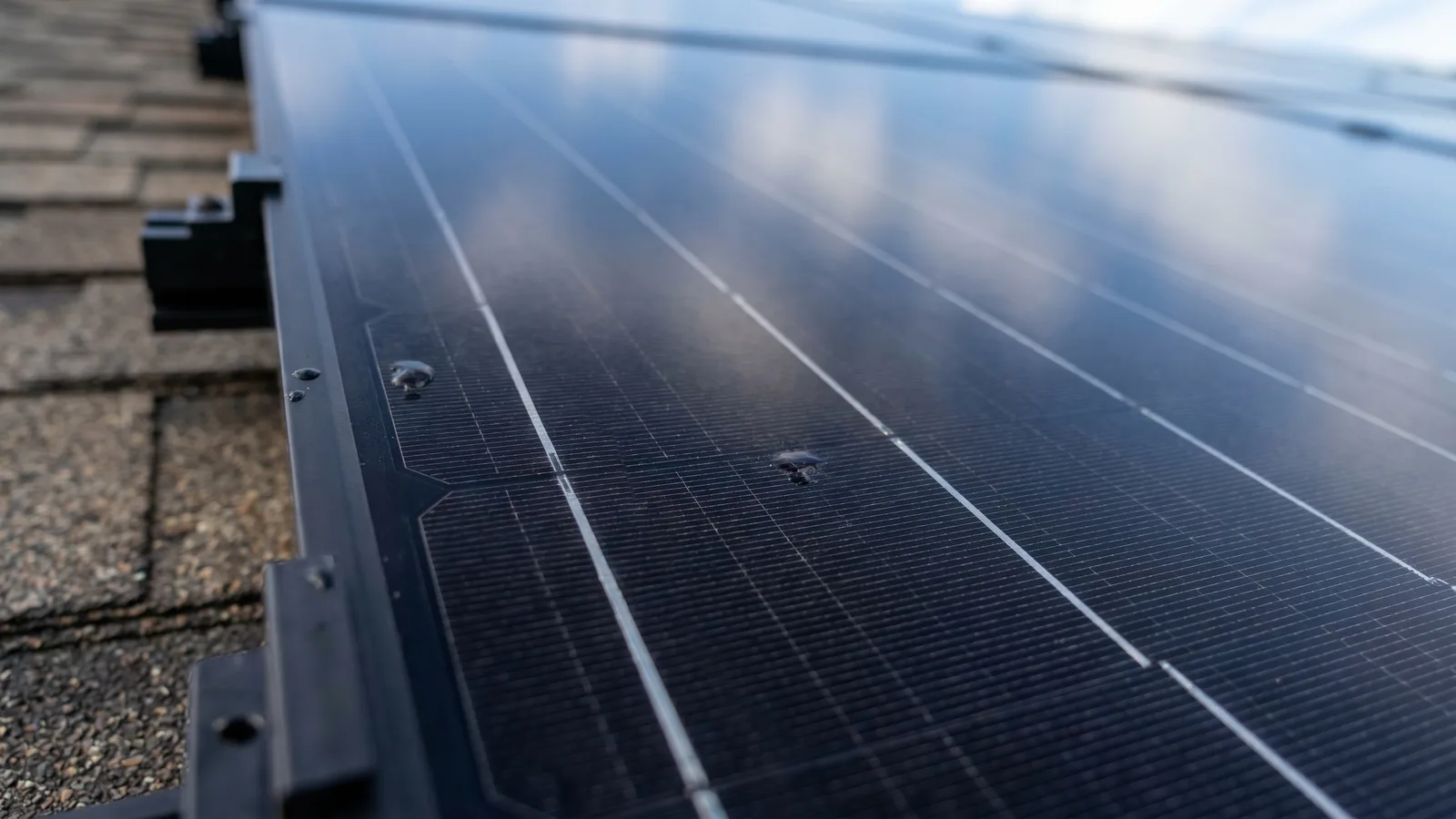
Quality solar panels last 25 to 30 years, and often keep producing well beyond that, just at slightly reduced output. Most tier-1 panels carry a 25-year product warranty plus a 25–30 year performance warranty guaranteeing around 85–88% of original output at the end of the term.
How much do solar panels degrade?
Modern panels degrade about 0.4–0.5% per year after a small first-year settling drop (~1–2%). So a 440 W panel typically still produces around 88% of that, about 387 W, at year 25. You don't fall off a cliff at year 25; the warranty simply ends.
What actually fails first?
Usually not the panels, it's the inverter. String inverters typically last 10–15 years and are the most likely component to need replacing once in the system's life (budget ~$1,500–$2,500). Microinverters and premium hybrid inverters last longer. Batteries are warranted around 10 years or a set cycle count, whichever comes first.
How to make panels last longer
- Choose tier-1 panels with a 25-year product (not just performance) warranty, compare our brand reviews.
- Use a CEC-accredited installer; poor mounting and DC isolator faults cause most early failures.
- Let the rain clean them, only heavily soiled panels (dust, bird mess, salt) need an occasional wash.
Common questions
Do solar panels really last 25 years?
Yes, and usually longer. The 25-year figure is the typical product warranty; panels keep generating after it, just below the warrantied output level. Degradation is only about 0.5% a year.
What's the difference between product and performance warranty?
The product warranty covers the panel against defects/failure (typically 25 years on tier-1 panels). The performance warranty guarantees a minimum output, usually ~85–88% of the original rating, at the warranty endpoint.
How often do you replace a solar inverter?
Once in the system's life for most homes. String inverters last about 10–15 years; replacement runs roughly $1,500–$2,500. Factor this into long-term payback.