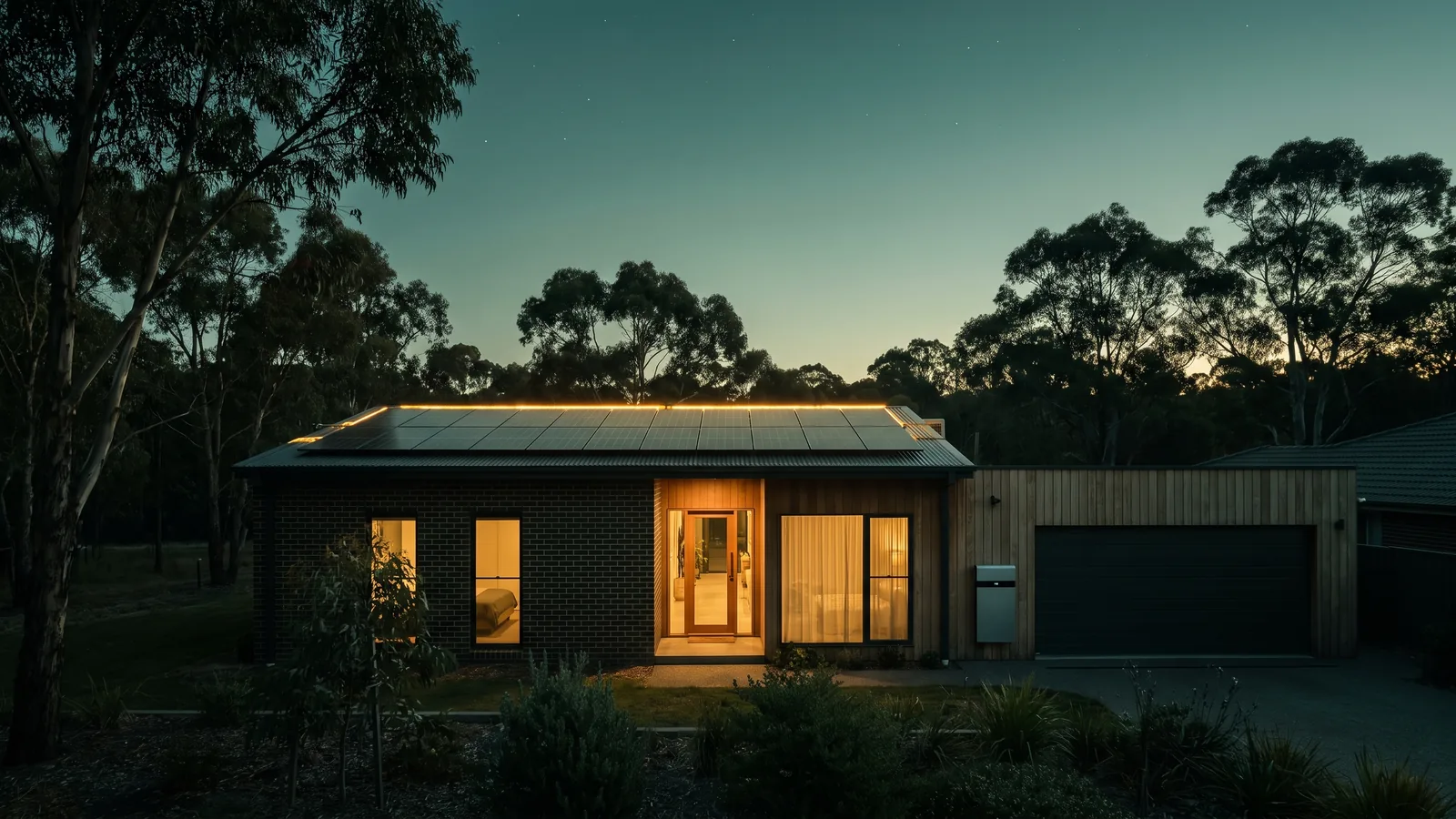
Charging a Tesla at home in Australia costs roughly $15–$25 for a full charge on grid power (about 4–6c per km), or close to free if you charge from your own rooftop solar during the day. The exact cost depends on your battery size, your electricity rate, and whether you charge on solar, off-peak, or peak power.
The maths
A Tesla Model 3 or Model Y uses about 14–16 kWh per 100 km. At an average grid rate of ~30c/kWh, that's roughly $4.50–$4.80 per 100 km. A full ~60 kWh charge costs around $18 on grid power. Charge from solar instead and the marginal cost is close to zero, you're using power that would otherwise export for just 4–10c/kWh.
Grid vs solar vs off-peak
| Charging source | Rate | Cost per 100 km |
|---|---|---|
| Peak grid | ~30–40c/kWh | $4.50–$6.40 |
| Off-peak grid | ~18–25c/kWh | $2.70–$4.00 |
| Your own solar | ~0–10c/kWh | $0–$1.60 |
Why solar owners charge for almost nothing
If you can plug in during the day, every kWh you put in the car is a kWh you didn't export for a few cents. A larger 8–10 kW system or a home battery lets you cover most EV charging from your own roof. See what a system costs or how much solar you'd need.
Common questions
How much does it cost to charge a Tesla at home in Australia?
About $15–$25 for a full charge on grid power (roughly $4.50–$5 per 100 km at a ~30c/kWh rate). Charging from your own solar during the day brings it close to free.
Is it cheaper to charge an EV with solar?
Much cheaper. Solar self-consumption costs you only the feed-in tariff you forgo (4–10c/kWh) versus 30c+ from the grid, often a 70–90% saving on charging.
How much solar do I need to charge an EV?
An extra 2–3 kW of panels typically covers average EV driving (~12,000 km/year). Many EV households move from a 6.6 kW to an 8–10 kW system, sometimes with a battery to charge overnight.