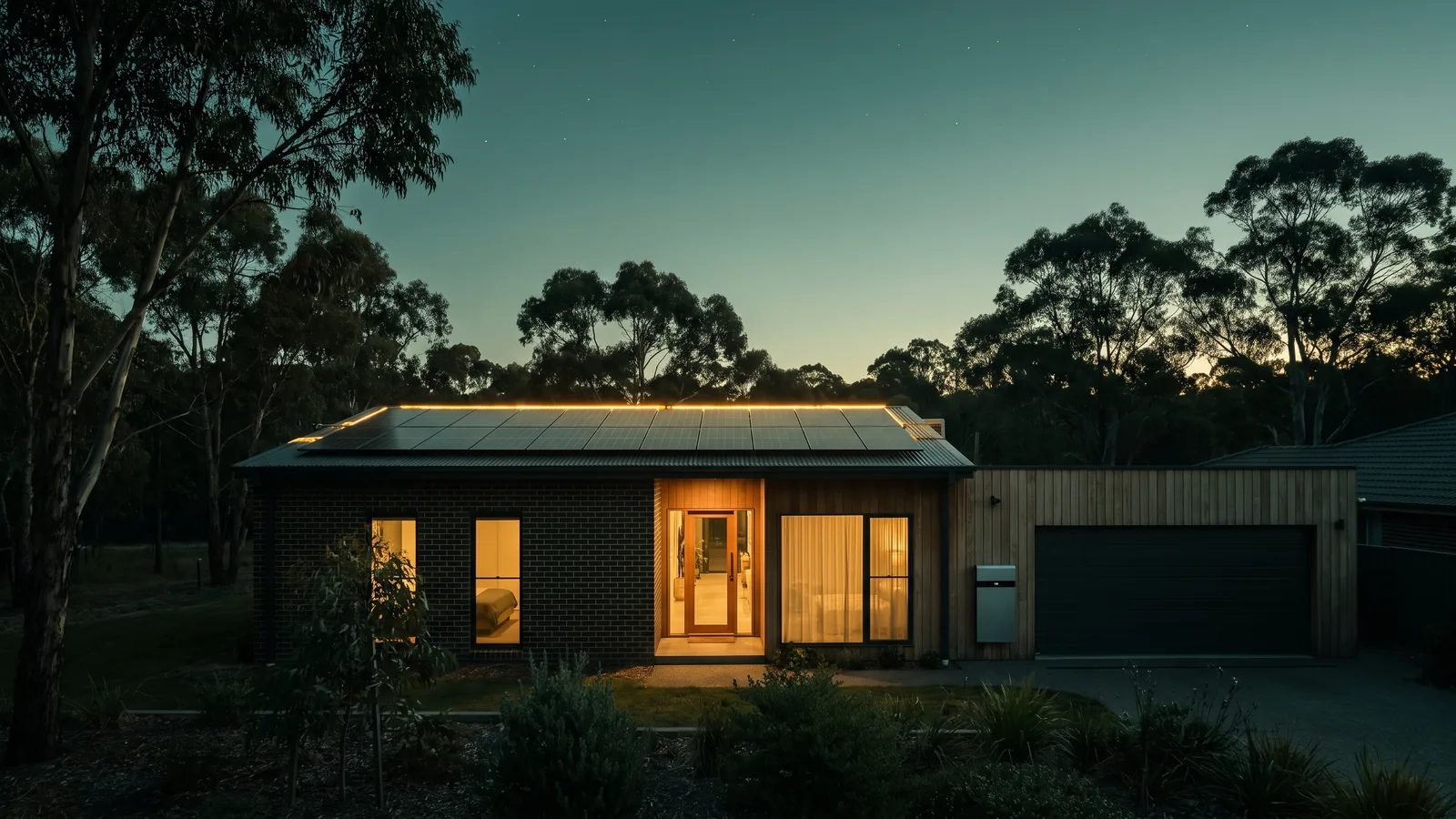
For a home that already has solar, a 10 kWh battery costs about $9,232 after the federal rebate and cuts an average bill by about $460-$700 a year, a payback of roughly 13.2 to 20.1 years across the states on bill savings alone. VPP income is not included; with it, 9.7 to 13 years. Whether that is "worth it" depends on your evening use and how long you will stay in the house. Assumptions below.
Payback by state
A 10 kWh battery added to an existing solar system, at each state's own average quarterly bill, priced after the federal Cheaper Home Batteries rebate only:
| State | Avg. quarterly bill | Net cost, federal rebate only | Bill saving a year | Payback, bill savings only | With $250/yr VPP credits | State extra (conditional) |
|---|---|---|---|---|---|---|
| NSW | $497 | $9,232 | $600 | 15.4 yrs | 10.9 yrs | Varies by provider, if you join a VPP (PDRS Virtual Power Plant connection incentive) |
| VIC | $470 | $9,232 | $560 | 16.5 yrs | 11.4 yrs | None for general households |
| QLD | $518 | $9,232 | $620 | 14.9 yrs | 10.6 yrs | None for general households |
| SA | $477 | $9,232 | $580 | 15.9 yrs | 11.1 yrs | None for general households |
| WA | $420 | $9,232 | $500 | 18.5 yrs | 12.3 yrs | $1,300 (WA Residential Battery Scheme, Synergy customers) |
| TAS | $584 | $9,232 | $700 | 13.2 yrs | 9.7 yrs | None for general households |
| ACT | $433 | $9,232 | $520 | 17.8 yrs | 12 yrs | None for general households |
| NT | $380 | $9,232 | $460 | 20.1 yrs | 13 yrs | None for general households |
The assumptions behind every figure
- Price: $10,480-$13,376 installed for 10 kWh before rebates, midpoint used, from the battery price table (prices as of 10 October 2026), less the $2,696 federal rebate.
- Bill: each state's average quarterly bill, shown in the table.
- Grid power at 32c/kWh; about $400/yr of supply charges that solar can't offset.
- Solar yield 1,450 kWh per kW per year (national average); each generated kWh valued at about 15c blended (self-use plus export); solar alone offsets at most 60% of the bill.
- Battery cycles about 80% of its capacity daily at the evening spread (32c grid vs 5c feed-in), calibrated to the government's up-to-$1,100/yr estimate for 13.5 kWh; solar plus battery offsets at most 90% of the bill.
- Payback counts bill savings only. VPP credits (assumed $250/yr, the low end of the typical $200-$500/yr) are shown separately.
- State incentives are left out of the net cost and payback because each comes with conditions (VPP enrolment, retailer or network); the last column shows them.
- General information, not financial advice. Your bill, tariff and evening use decide your own payback; run them through the calculator.
What moves the answer
- Evening use. The battery only saves money on power you would otherwise buy after dark. A house that is empty every evening gets less from one.
- State incentives, where you qualify. NSW: Varies by provider, if you join a VPP (PDRS Virtual Power Plant connection incentive); WA: $1,300 (WA Residential Battery Scheme, Synergy customers). See your state battery rebate page.
- The federal step-down. The rebate factor drops on 1 January 2027, so the same battery installed after that date gets a smaller discount.
- Joining a VPP adds credits on top of the bill saving, which is why it has its own column above. The typical range is $200-$500/yr, per Gridly (industry estimate); we assume the low end.
- Diminishing returns. The savings engine caps total savings at a share of the bill, so once a household's evening use is covered, a bigger battery adds cost without adding saving.
How long does it take for a solar battery to pay for itself?
On our figures, 13.2 to 20.1 years for a 10 kWh battery on bill savings alone, shortest in TAS on its $584 average quarterly bill. The batteries we list are warranted for 10 years; on bill savings alone, every state we track takes longer than that to repay the battery, which is why VPP credits, state incentives and your own evening use matter. See how long a 10 kWh battery lasts.
Can I charge my solar battery from the grid overnight?
Yes. Hybrid batteries can charge from the grid as well as from solar, and warranties cover it: Tesla's Australian Powerwall warranty, for example, lists storing grid energy for time-of-use shifting as a covered use (Tesla Powerwall Warranty (Australia and New Zealand), effective 6 May 2026). It only saves money if your tariff's overnight rate is well below your evening peak rate, and some VPPs control charging for you.
See full battery pricing by brand and size on solar battery prices.
Common questions
Is a solar battery worth it in 2026?
It depends on your evening use. On our figures a 10 kWh battery added to existing solar costs about $9,232 after the federal rebate and pays back in 13.2 to 20.1 years on bill savings alone across the states, or 9.7 to 13 years with $250 a year of VPP credits. State incentives in some states shorten it further.
Which state has the best battery payback?
TAS, at about 13.2 years on bill savings alone (9.7 with VPP credits), on its average bill of $584 a quarter: a bigger bill leaves more evening use for the battery to cover. Federal rebate only; a state incentive can change the order where you qualify.
How long does it take for a solar battery to pay for itself?
13.2 to 20.1 years for a 10 kWh battery on bill savings alone, on each state's average bill, after the federal rebate. VPP credits bring it to 9.7 to 13 years.
Is the battery rebate reducing?
It already has once and will again. The federal factor fell from 8.4 to 6.8 STCs per usable kWh on 1 May 2026, which took a 10 kWh battery's rebate from about $3,331 to $2,696. The next step is to 5.7 on 1 January 2027, about $2,260 on the same battery, and the factor keeps stepping down every 1 January and 1 July to 2030. The rebate is set by the installation date, not the date you sign a contract.
Can I charge my solar battery from the grid overnight?
Yes. Hybrid batteries can charge from the grid as well as from solar, and warranties cover it (Tesla's Australian Powerwall warranty lists grid charging for time-of-use shifting). It only saves money if your overnight rate is well below your evening rate.