 01 30 sec
 Tell us your postcode and bill
The calculator above gives you the stacked number instantly. Want it made real? That takes four quick questions. No accounts, no spam.
The bill-relief credits ended in December. What's left is the biggest battery discount Australia has ever run, and it steps down on a legislated schedule. Type your postcode, get your number. No email needed to see it.
Type your postcode and your number appears here. Federal battery discount, solar STCs, state extras, all stacked, all sourced. Nothing gated.
100% free · No obligation · One vetted installer, never five · Every figure sourced and dated
01 30 sec The calculator above gives you the stacked number instantly. Want it made real? That takes four quick questions. No accounts, no spam.
 02 24-48 hr
 One CEC-accredited installer checks your roof, shading and usage, then gives you an exact, no-obligation price. Real human. Australian. Never pushy.
 03 done
 A fixed price, a booked install date, and every rebate applied straight to the invoice. You never touch the paperwork.
Midday exports now earn 3.4–6.5c in NSW. Victoria's legal floor is $0.00, and the new Solar Sharer Offer literally gives away free midday power. Meanwhile evening grid power costs 30c to 55c. A battery moves your solar from the worthless hours into the expensive ones, every single day.
what a kilowatt-hour of exported solar earns under IPART's 2026-27 all-day benchmark
Source: IPARTVictoria scrapped its minimum feed-in tariff in July 2025. Retailers can lawfully pay nothing for your midday exports.
Source: Essential Services Commissionof free midday electricity under the new Solar Sharer Offer. Midday power is now nearly free. Evening power is not.
Source: energy.gov.auThe money is not in exporting anymore. It is in not buying evening power.
This is not marketing pressure, it is legislation. The federal factor is 6.8 STCs per usable kWh until 31 December 2026, drops to 5.7 on 1 January 2027, and keeps stepping down until the program ends in 2030. On a 13.5 kWh battery, that first step alone is worth about $599.
Source: DCCEEW, Cheaper Home Batteries Program. Schedule verified 13 July 2026, reviewed at least annually by the regulator.
The federal battery discount and solar STCs apply everywhere in Australia, then your state decides what stacks on top. We track all 8 jurisdictions, including the schemes that closed, because half the internet still advertises dead rebates.
6.8 STCs per usable kWh until 31 Dec 2026, applied at point of sale.
Needs solar (new or existing), a VPP-capable battery, one claim per home.
Source: DCCEEW, Cheaper Home Batteries Program5-year deeming in 2026, drops every 1 January until zero in 2031.
Valued at the current $39.90 STC price; amount varies by STC zone.
Source: Clean Energy Regulator, SRESClosed and gone: QLD Battery Booster (May 2024) · VIC battery loan (May 2025) · TAS Energy Saver Loan (Sep 2025) · NT battery grant (Jun 2025) · SA Home Battery Scheme (2022). If a site is still advertising these, close the tab.
Every line below is computed from the current federal factors and verified state programs, sources linked. When a rate changes, these change the same day.
Government-estimated saving: up to $1,100/yr. At that rate this pays for itself in about 3 years.
Source: DCCEEW ministerial releaseGovernment-estimated saving: up to $2,300/yr, about 90% of a typical bill
Source: DCCEEW ministerial releaseThe system does not get cheaper in January. The rebate gets smaller.
Source: Clean Energy Regulator, SRESThe government's own estimate for a battery on existing solar is up to $1,100 a year. Against our network offer, a 15 kWh battery installed for $4,500 after the federal rebate, that arithmetic lands at roughly 2 to 4 years to pay for itself, fastest where a state incentive stacks on top. Payback is a function of your buy price, and the buy price is the thing we fixed.
Most rebate sites hand you a form and a list of installers to chase. We hand you one matched installer, every rebate stacked, and your exact quote on a single call.
One matched installer. Every rebate stacked. Your exact quote on a single call. Free for the homeowner.
For comparison.
The federal Cheaper Home Batteries discount is 6.8 STCs per usable kWh, about $271/kWh gross (typically $244 to $252/kWh net after installer fees) on the first 14 kWh, tapered above that, for installs certified by 31 December 2026. In practice it takes around 30% off the installed price. On a typical 13.5 kWh battery that is about $3,631, applied at point of sale.
A 10 kWh usable battery earns 68 STCs, worth about $2,713 at the current $39.90 STC price. State extras can stack on top: NSW pays a VPP connection incentive up to $1,500, and WA pays $130 per kWh up to $1,300 for Synergy customers.
The program is legislated to 2030, but the per-kWh factor steps down every 1 January and 1 July. The next step, on 1 January 2027, cuts the factor from 6.8 to 5.7 and costs a 13.5 kWh install about $599. The scheme is not disappearing overnight, it just gets a little less generous every six months.
Yes. The solar STC deeming period fell to 5 years for 2026 installs and drops another year every 1 January until it reaches zero in 2031. A 6.6 kW system in Sydney gets about $1,796 today and about $1,436 from January 2027, so waiting six months costs roughly $360.
The official average saving from rooftop solar is more than $1,500/yr (energy.gov.au). With feed-in tariffs now around 3.4–6.5c in NSW, most of that value comes from power you use yourself rather than what you export, which is why daytime usage and a battery matter more than panel count.
Yes. The battery must be connected to solar, either a new system installed at the same time or panels you already have. It also needs to be VPP-capable if you are on-grid, installed by an accredited installer using a CER-approved product, and it is one claim per home.
One CEC-accredited installer calls within 24 to 48 hours with your exact quote, they check your roof, shading and usage so the price is real, not a guess. That's the one call. They're Australian, give straight answers, and don't work on hard-sell commissions. If now isn't a good time, just let us know and we'll work around you.
Every figure was verified on 13 July 2026 against DCCEEW, the Clean Energy Regulator and each state's own program page, and each figure on this site links to its source. Next scheduled re-check is 1 January 2027, when the STC step-downs land, or sooner if the regulations change.
No pressure. Dig into the rebates, the batteries and exactly how the matching works before you check your address.
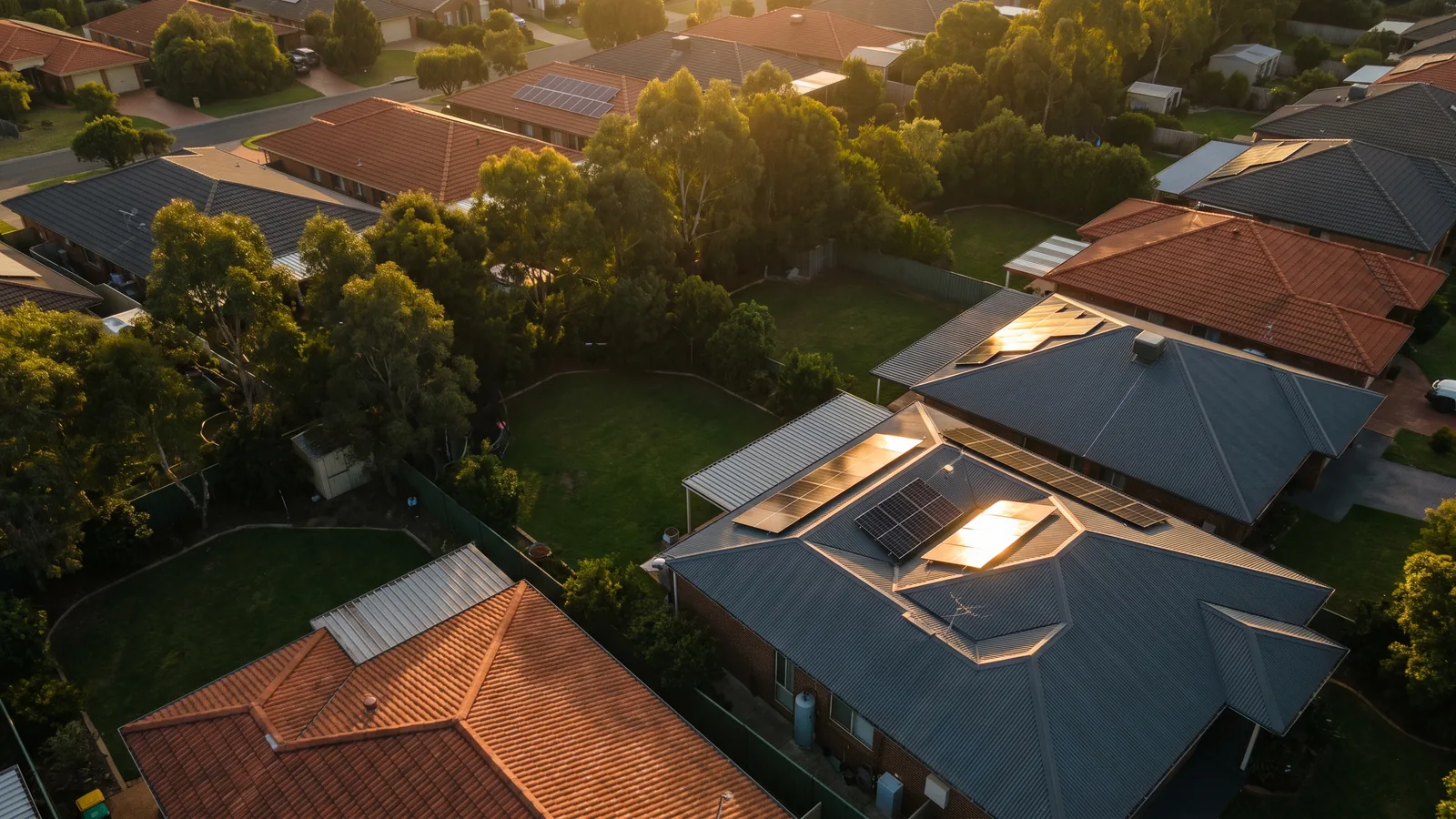
Federal STC, the battery rebate and every state top-up, stacked by where you live.
Explore Tesla, Sungrow, BYD and more, compared on price, backup and value after rebates.
Explore One short check, one vetted installer, one real quote. No quote-shopping, no spam.
Explore